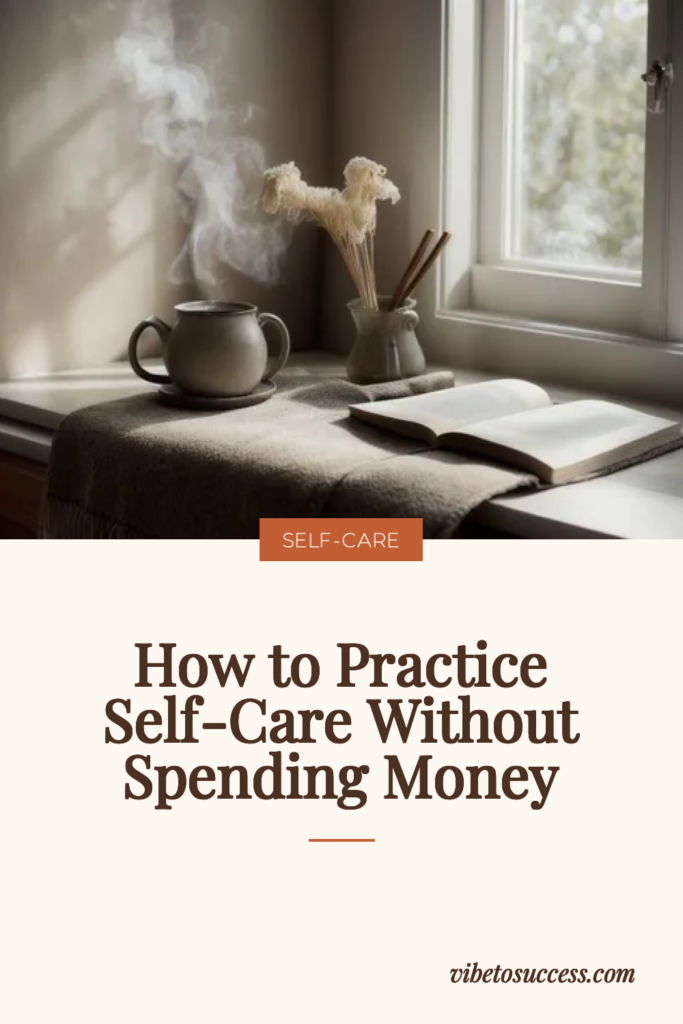
Self-care has been packaged and sold back to us as an industry. Face masks, wellness subscriptions, expensive retreats, and curated self-care boxes have turned something that used to be free into a spending category. The irony is that the most effective forms of self-care — the ones that actually restore energy, reduce stress, and improve mental and physical health — cost nothing and have always been available.
This is a guide to genuine self-care that doesn’t require a budget line.
Sleep Is the Foundation
No wellness practice compensates for chronic sleep deprivation, and no amount of money buys the physiological restoration that comes from seven to nine hours of quality sleep. Protecting sleep is the highest-return self-care decision available to most people, and it costs nothing except the discipline to treat bedtime as non-negotiable.
Practical free improvements to sleep quality: consistent wake time every day (including weekends), no screens for 30-60 minutes before bed, a cool room, and complete darkness. These changes produce measurable improvements in sleep quality without any financial investment.
Move Your Body Daily
Exercise is the most evidence-backed mental health intervention available — more effective than many pharmaceutical options for mild to moderate depression and anxiety, with no side effects and no cost. A 30-minute walk changes your neurochemistry in ways that a $200 wellness product cannot replicate.
Walking, bodyweight exercise, free YouTube workouts, running, cycling, swimming in public pools — the movement options that cost nothing are extensive. The gym is optional. Movement is not.
Spend Time in Nature
Research on time in natural environments consistently shows reductions in cortisol (the stress hormone), blood pressure, and anxiety, alongside improvements in mood and cognitive function. The Japanese practice of shinrin-yoku (forest bathing) — simply spending time among trees with deliberate attention to the sensory experience — has a substantial body of supporting research and costs nothing.
A local park, a river walk, a beach, a forest trail — access to nature is more democratic than the wellness industry suggests. Most people have some form of natural environment within reasonable distance. Using it regularly and intentionally is genuine self-care.
Digital Detox Periods
The relationship between social media use and mental health outcomes — particularly anxiety, comparison, and disrupted sleep — is one of the most well-documented in contemporary psychology. Reducing or eliminating social media for defined periods is one of the most impactful self-care decisions available, and it saves time rather than costing money.
Start with one hour per day of phone-free time — during meals, in the first hour after waking, or in the hour before bed. Notice the difference. Extend from there.
Connect With People Who Restore You
Human connection is a biological need, not a preference, and its role in health outcomes is as significant as diet and exercise. The research on loneliness and physical health is striking — chronic loneliness has mortality risks comparable to smoking. Investing time (not money) in relationships with people who genuinely restore your energy is self-care at its most fundamental.
This also means being intentional about reducing time with people who consistently drain energy. The social audit — noticing which relationships leave you feeling better or worse — is free and often produces one of the most significant quality-of-life improvements available.
Journaling and Mental Processing
Writing about thoughts and emotions — not for any audience, just for clarity — has consistent research support for reducing anxiety, improving mood, and helping process difficult experiences. James Pennebaker’s research at the University of Texas demonstrated significant physical and psychological health benefits from regular expressive writing. You need a notebook and a pen. Both are optional — the notes app on your phone works just as well.
Learn Something New
Cognitive engagement — learning that challenges you in ways your regular work doesn’t — is one of the most reliable mood and energy enhancers available. Libraries are free. YouTube has more high-quality educational content than any university could have offered 20 years ago. Podcasts, open courseware from MIT and Yale and Stanford — the cost of learning something new is effectively zero for anyone with internet access. Using that access deliberately and regularly is a form of self-care that pays dividends in engagement, confidence, and capability.
Rest Without Guilt
The most countercultural form of self-care in a productivity-obsessed world is rest — deliberate, guilt-free, unproductive rest. An afternoon reading a book. An hour lying in the garden. Sitting without a screen for twenty minutes. These are not wasted time. They are physiologically necessary for cognitive performance and emotional regulation, and they cost nothing except the willingness to stop treating every moment as an opportunity to produce something.
Related posts you might love: